
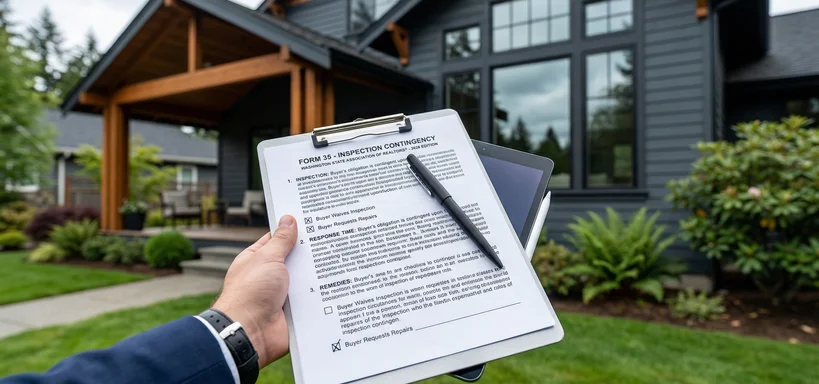
The landscape of Washington state real estate transactions has been evolving rapidly. Following the sweeping agency law revisions of recent years and continuous adjustments to standard addenda, navigating NWMLS and Washington REALTORS® (WR) forms requires relentless vigilance from industry professionals. For 2026, the spotlight falls squarely on Form 35, the Inspection Contingency Addendum. Whether you are a newly licensed broker, a veteran managing broker, or a buyer or seller entering the competitive Washington market, mastering the intricacies of Form 35 and the Form 35R response process is essential for protecting your transaction and your real estate license.
This guide serves as a practical, authoritative roadmap to the current state of Form 35. We will unpack the enduring waiver trap introduced in 2023, the baseline functioning of contingency timelines, anticipated 2026 updates, and the critical intersection of contractual deadlines with statutory broker duties.
The Game-Changing 2023 Revision: The Waiver Trap
To fully grasp the 2026 forms landscape, we must first revisit a pivotal shift that occurred on July 11, 2023. That revision introduced one of the most significant behavioral changes in recent Washington real estate history: the "waiver by delivery" risk. According to Washington REALTORS® official guidance, a buyer can inadvertently waive their entire inspection contingency if they, or their broker, deliver any portion of the inspection report to the seller without the seller's prior consent.
Before this update, it was standard practice for buyer's agents to email pages of the inspection report to the listing agent in order to justify a request for repairs or a price reduction. Today, executing that same action outside the strict parameters of the contract is a potentially fatal error. The rule was implemented because sellers assume significant liability when they receive unsolicited inspection reports: possessing the report can obligate the seller to disclose newly discovered material defects to future buyers if the current transaction falls through. Consequently, the burden now rests on the buyer to keep the report confidential unless the seller explicitly requests it through the proper addenda.
How Form 35 Timelines Work in Washington
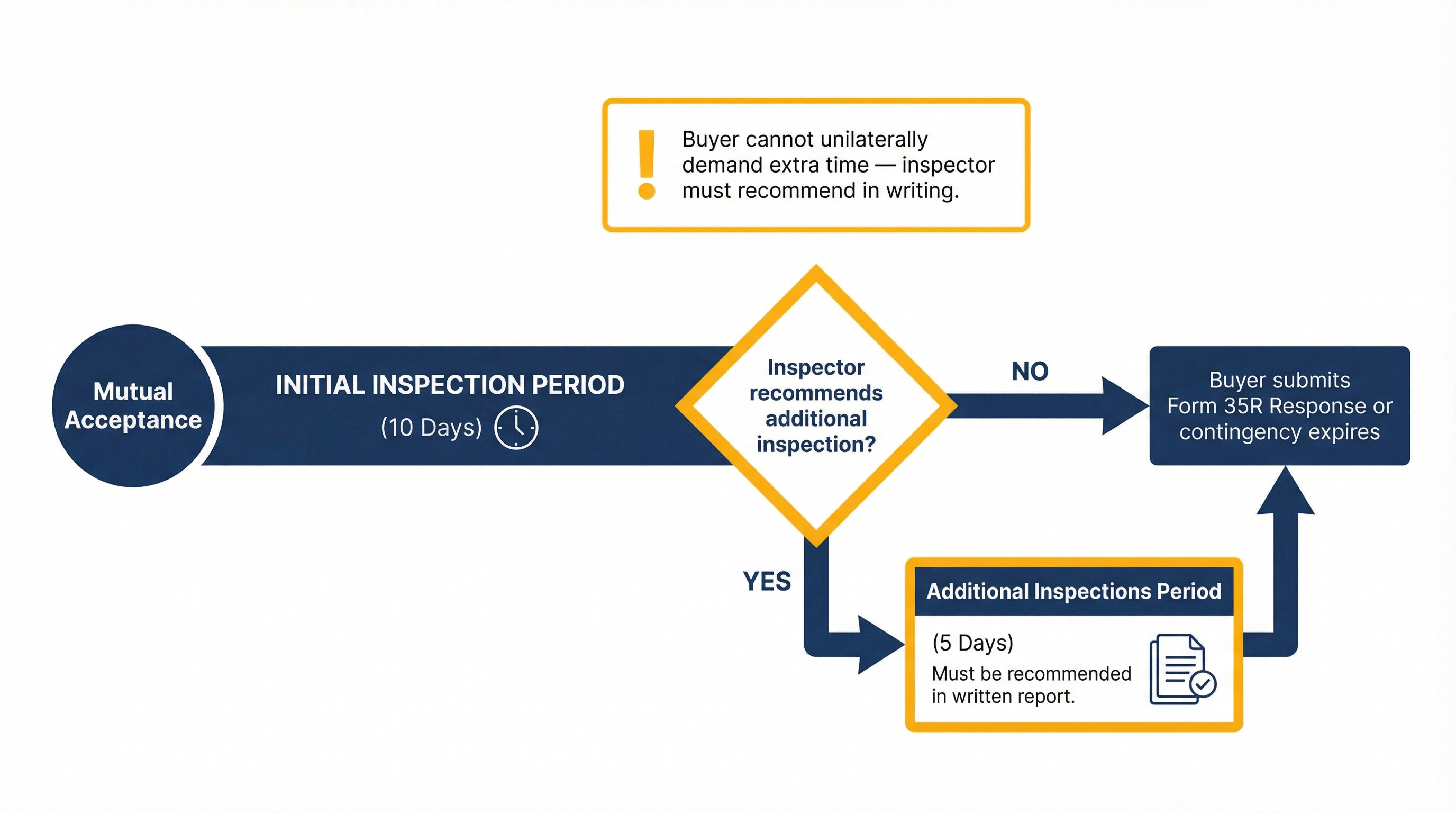
Understanding the architecture of Form 35 is essential before unpacking the latest updates. By default, the Form 35 inspection contingency provides a 10-day initial inspection period. During this window, the buyer conducts their primary evaluation of the property. If the initial inspector discovers an issue that warrants evaluation by a specialized professional — such as a structural engineer, sewer technician, or roofer, the buyer can trigger an "additional inspections" period, which defaults to 5 days.
Critically, the buyer cannot unilaterally demand this additional time simply because they want contractor bids or need more time to deliberate. The original licensed inspector must explicitly recommend the additional inspection in their written report. Furthermore, while the buyer cannot send the report unsolicited, the seller has the contractual right to demand proof of the inspector's recommendation. This mechanism creates a tightly controlled, form-driven pathway for limited disclosure that protects both parties.
Equally important is understanding the vehicle used to navigate these timelines. Form 35R (Inspection Response) is the specific contractual instrument through which buyers and sellers communicate their inspection responses and negotiate repairs or credits. Using the wrong form — such as a generic addendum or a plain email, or failing to use Form 35R at all, introduces significant risk independent of the waiver-by-delivery issue.
 2026 Inspection Timeline Updates: What We Know
As we move through 2026, Washington REALTORS® is actively rolling out essential training on new statewide forms revisions. A highly anticipated March 3, 2026 WR training event specifically highlights "inspection timeline updates" as a core curriculum topic. Washington REALTORS® has confirmed that inspection timeline updates are part of the 2026 revisions, but the specific clause-by-clause changes are available only through authorized member platforms and training. Agents should verify the current Form 35 revision date in their licensed system without delay.
Because NWMLS Rules 61 and 62 strictly prohibit the unauthorized online republication of copyrighted forms and legal bulletins, agents cannot rely on public forums for exact contractual language. Real estate professionals must log into their authorized forms platform to identify the current Form 35 revision date, avoid relying on outdated templates or secondary sources, and attend authorized WR or NWMLS training to understand the precise mechanics of the updated 2026 language.
Electronic Delivery and Evidence Risks
In modern transactions, responses are routinely transmitted via email or electronic signing platforms. Washington adopted the Uniform Electronic Transactions Act (UETA) via SB 6028, meaning electronic delivery of inspection notices is generally valid and enforceable. However, "waiver by delivery" disputes are fundamentally evidence disputes — parties often argue over what was sent, when it was sent, and to whom it was delivered.
For this reason, brokers must maintain meticulous, documented proof of delivery. This includes preserving timestamps, recipient confirmations, and records of the exact attachment versions transmitted, in order to prevent any ambiguity regarding compliance with Form 35's strict delivery rules.
The "Waiver by Delivery" Trap: Practical Scenarios
Waiver-by-Delivery Decision Tree: One wrong attachment can forfeit your buyer's entire inspection contingency. Always verify seller consent before transmitting any inspection report materials.
Unsafe Scenario: A buyer's inspection reveals a failing HVAC system. The buyer's agent emails the listing agent stating, "My buyers are requesting a $5,000 credit for the furnace. See attached pages 12–15 of the inspection report for photos and details." Because the seller never formally consented to receive the report, this email constitutes a direct breach of the delivery rules. As a result, the buyer may have waived their entire inspection contingency. A contingency waiver of this nature may eliminate the buyer's ability to exit the transaction without consequence — the precise outcomes will vary based on contract specifics, and buyers in this situation should consult with their broker and legal counsel regarding their options.
Safe Scenario: The agent submits a Form 35R requesting the $5,000 credit, explicitly describing the HVAC issue in the form's designated text fields without attaching any portion of the report. The listing agent, after consulting with the seller, responds using the proper form to request the inspector's specific recommendation. The buyer's agent then securely delivers only the targeted recommendation excerpt, exactly as authorized by the seller's formal request. The contingency remains fully intact, and negotiations proceed on solid ground.
Statutory Duties That Amplify Form 35 Risk
Managing the Form 35 inspection contingency is not merely an exercise in contract administration — it is directly tied to real estate licensing law. Under Washington Agency Law, specifically RCW 18.86.030, a broker owes a non-waivable duty to all parties to exercise reasonable skill and care and to present all written offers, written notices, and other written communications in a timely manner. Because Form 35 and the Form 35R response addendum operate entirely on a notice-and-deadline framework, failing to deliver a buyer's inspection response before the deadline expires can constitute a direct violation of a broker's statutory duties. A delayed communication could expose the broker to disciplinary action from the Department of Licensing (DOL) and significant civil liability.
Brokers must also clearly delineate the Form 35 inspection timeline from the Form 17 Seller Disclosure Statement. Regulated under a separate statutory framework, with the disclosure itself outlined in RCW 64.06.020 and the delivery and rescission timeframes governed by RCW 64.06.030 — the seller disclosure process imposes its own constraints and grants the buyer a distinct statutory rescission clock. Buyers frequently conflate these two processes, mistakenly assuming that Form 17 disclosures provide a secondary inspection window. They are entirely separate legal pathways that require meticulous, independent tracking by the broker.
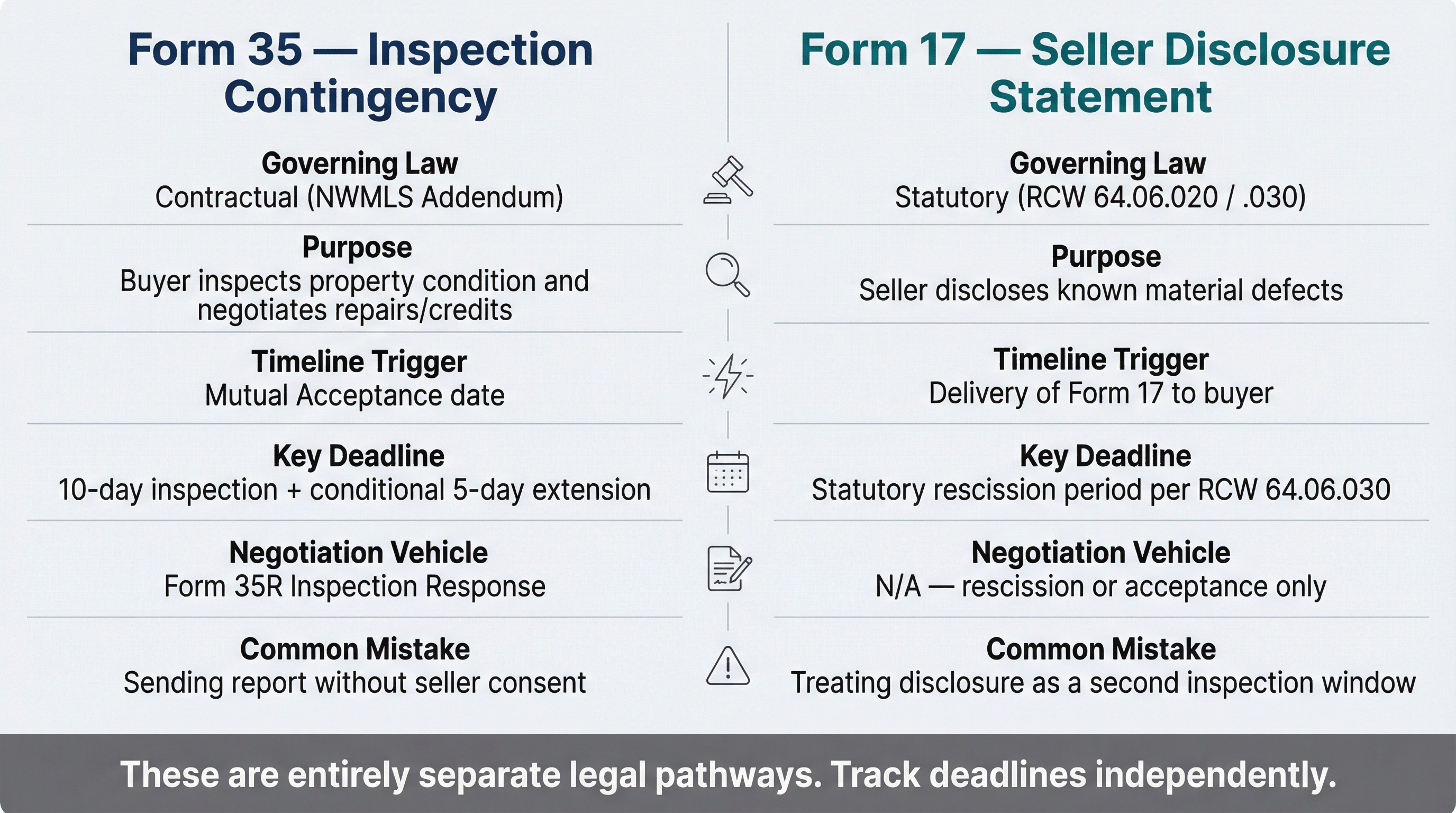
Form 35 vs. Form 17: Two separate legal pathways that buyers and agents frequently conflate. Track each timeline independently from its own trigger date.
Home Inspector Standards
The efficacy of the Form 35 inspection contingency relies heavily on the baseline standards governing Washington's inspection industry. Home inspectors in the state are regulated under RCW 18.280, which legally defines a home inspection as a visual and noninvasive examination of a property's readily accessible systems and components. Agents should proactively educate their buyers on this limitation: an inspection is not a destructive testing process, nor is it an absolute guarantee against all hidden defects. For Form 35 purposes, this means the "additional inspections" trigger is anchored to what the initial noninvasive evaluation can reasonably identify.
Brokers should also monitor separate regulatory developments, such as the Washington State Department of Licensing (DOL) public listening sessions initiated in January 2026 to discuss potential updates to WAC 308-408C, the Standards of Practice for home inspectors. While not a confirmed change to the contingency itself, any future modifications to these regulatory standards could affect what inspectors are required to report, with downstream implications for the transaction. Staying attuned to these shifts enables brokers to advise their clients with greater precision.
Practical Action Items for WA Real Estate Agents
To successfully navigate the evolving 2026 real estate landscape, Washington brokers should adopt a proactive risk-management mindset. The following steps are worth implementing immediately.
- Verify Form Versions: Never rely on saved, offline PDFs. Because NWMLS prohibits the unauthorized republication of forms, always initiate transactions directly within your authorized software — such as Transaction Desk, to ensure you are working with the most current 2026 revisions.
- Attend 2026 Training: Register for the WR March 3, 2026 forms class or your local MLS equivalent. This is the most reliable way to understand the exact, copyrighted timeline updates that govern your deadlines.
- Build Redundant Timeline Trackers: Map your deadlines from the date of mutual acceptance. Methodically track the initial 10-day inspection period, the potential 5-day extension, and the separate Form 17 rescission clock to ensure all written communications are delivered on time.
- Enforce Delivery Checklists: Institute a clear standard within your team or brokerage: never attach inspection reports, excerpts, or photos to emails without documented, explicit seller consent through the appropriate addendum.
- Educate Your Buyers Early: Set realistic expectations from the outset. Explain that a home inspection is a visual, noninvasive process and that attempting to use the report as an informal negotiating tool — without following the proper contractual channels — risks forfeiting the buyer's contingency rights entirely.
Conclusion
The inspection contingency remains one of the most actively negotiated and legally consequential aspects of a Washington state real estate transaction. As 2026 brings anticipated timeline updates to the NWMLS Form 35, the fundamental principles of sound real estate practice remain unchanged. By rigorously respecting the 2023 "waiver by delivery" rule, adhering strictly to both contractual deadlines and statutory duties, and staying informed through official Washington REALTORS® channels, brokers can guide their clients through the inspection process with confidence and clarity. Protect your clients, protect your license, and master the forms.
Disclaimer: This article reflects publicly available information as of early 2026. NWMLS forms and legal bulletins are member-gated and subject to change. Real estate professionals should verify current form language through their authorized platforms and not rely solely on secondary sources like this article.